
Horror Atmosphere in VTTs
Running Horror Games virtually can be hard, we present some tips on how to maintain a spooky atmosphere.


I think this is going to be a relatively short post for the musings series, but it's a topic I've seen come up a few times, so I wanted to share some thoughts on the matter.
If you've read any of my posts or have looked at the 50+ scenarios that I've created for it, you won't be surprised that Ten Candles is one of my favorite games. I've even written an explanatory intro for it. It's a tragic horror game by design, though I've found it's also good for other genres (even subverting the genre altogether and running it as a comedy).
Ten Candles is one of those games that plays best in person. You turn the lights off, and sit around a ring of ten candles along with a bowl in the middle to burn your trait cards. Everything about that works to create a visceral horror atmosphere. The scent from the candles and burning cards. The light getting dimmer and dimmer with every extinguished candle. Your friends narrating in the room with you. If you've never experienced it in person, it's well worth doing.
The problem with that is that it's really only appropriate for a home game. Friendly local game stores dislike the liability associated with an open flame in the store. That makes running with strangers in person less viable, unless you're more open and trusting than I am. So, if you find yourself in the position where your RP friends are too far away to run in person, your options become either:
- Don't play Ten Candles
- Play Ten Candles over the internet on a VTT.
Pick option 1! Post over.
I'm joking, of course. I'm firmly of the opinion that the game stands up very well even as an online game, though you will lose some of the atmosphere.
Using a VTT to play Ten Candles
I have by far the most experience running Ten Candles on VTTs so I'll to start with that. There are a few different VTT systems, I've run the Tabletop Simulator Mod, and I created a little helper called Lucerna Tenebrae (it's kinda buggy but all it really does is sync candle states - and it can extinguish candles at random). But the core part of the game requires you to have a visual indicator of the state of the candles. That's table stakes.
The candles serve as the indicator of the game's pacing, and they also play a role in the tension and timing. They can go out on their own and there are special rules if they do. That can be hard to replicate in a VTT, but if you use a system that does that - it subtly enhances the mood. That said, that'll be background to the more foreground elements of mood.
The Usual Suspects
Surprise! Establishing a horror mood in a VTT is pretty similar to establishing a mood in any other genre, using the core elements
⚠️ Player Consent and Buy In
In horror games, it's essential that you get player consent before you present scary content or descriptions with them.
Do a session zero, make sure you know what topics are off limits, and what things should be done behind a veil. Introduce your players to the X-Card and use other safety tools.
Sound
The right sound track and sound board can do wonders for creating the right atmosphere. There are so many of these you can use, YouTube is filled with great ones which you can either have the players play together or use your VTT software to pipe them to everyone at the same time.
Likewise, having the ability (via something like Syrinscape) to either cause a shriek or unsettling sounds when thematically appropriate does wonders for the mood.
Visual Elements in VTT Setup
Depending on your VTT, you can add some other visuals to help maintain the mood. One way to do that is via background visuals and having those interact with the light source. Foundry provides a way to do dynamic lighting which you can use to illuminate images in the foreground. Using that, especially with the candles from Ten Candles, to show unnerving elements of an image can help establish the mood.
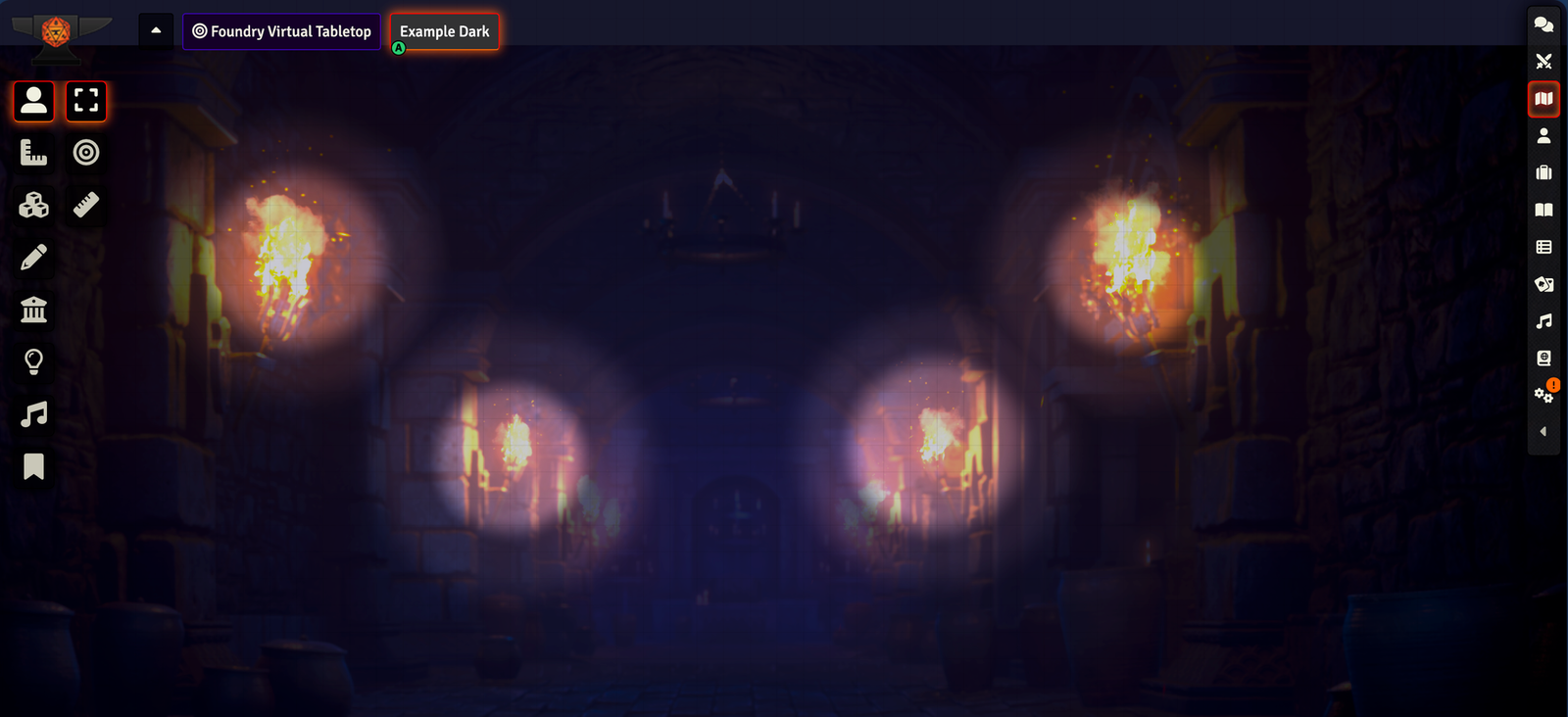
Typically, you'd use that kind of setup if you're moving tokens around a map, but it can also light a darkened a background image. I've used this to emulate torches on a static image here, but you can also use this to make tweak down the ambient light for the VTT, lowering the light levels as the tension builds.
Things For the Players to Do
As the GM, there are only so many things you can do to build the tension and mood via setup, but there are a few things your players can do for themselves.
- Ensure you're playing in a dark room, only illuminated by your monitor and/or camera. You can additionally use an LED candle or something to help (depending on your preference), but if the GM is using the lighting techniques above, you can also just use the ambient illumination of the monitor.
- Cameras: If you're comfortable doing so, have your camera on - if most of the group is on camera, it can help reinforce the feelings of dread as one person looking (appropriately) uncomfortable spreads to the rest of the group.
GM Techniques During Play
As the GM, while you're running the game, there are a few things you can do. These also work in person, but learning how to use these effectively makes running a satisfying horror VTT game easier.
Tension Breaks
Break the tension, briefly. Don't maintain the tension for the entire game, it's important to have some tension breaks - doing so allows the players to reset. You can do this in a bunch of ways, but I default to comedy. Allowing the players to laugh brings their guard down and allows you to ratchet up the tension back again later.
Use this one as often as necessary.
Anti Tension Breaks
Don't break the tension when they're expecting it. Almost the opposite technique as before, this is subverting the expectations of the players by describing a scene that naturally would lend itself to a "big reveal" or something unsettling and then letting it be mundane. If you don't get a revealed tension break, the tension remains. The players are subtly unnerved. This lets you build tension, and which can make later scenes more effective.
Use this one sparingly or they'll come to expect it.
Descriptions
Don't go overboard on gory descriptions - one of the major things you can do is be a little ambiguous, and allow the players' imaginations to fill in the blanks. You can't do this with the narratively important things (like room exits, for example) but it's a great way to both build tension and save yourself some effort.
If you're in a game where the players also control the narrative, or are playing a GMless game, eventually everyone at the table will start doing this and not realize they're doing it.
Wrap Up
Okay! That was a little longer than I was expecting it to be, but I hope that these are decent tips. If you want some more stuff, I've enjoyed this Screenrant Article and this Mythcreants Post.
Happy Horror GMing!